

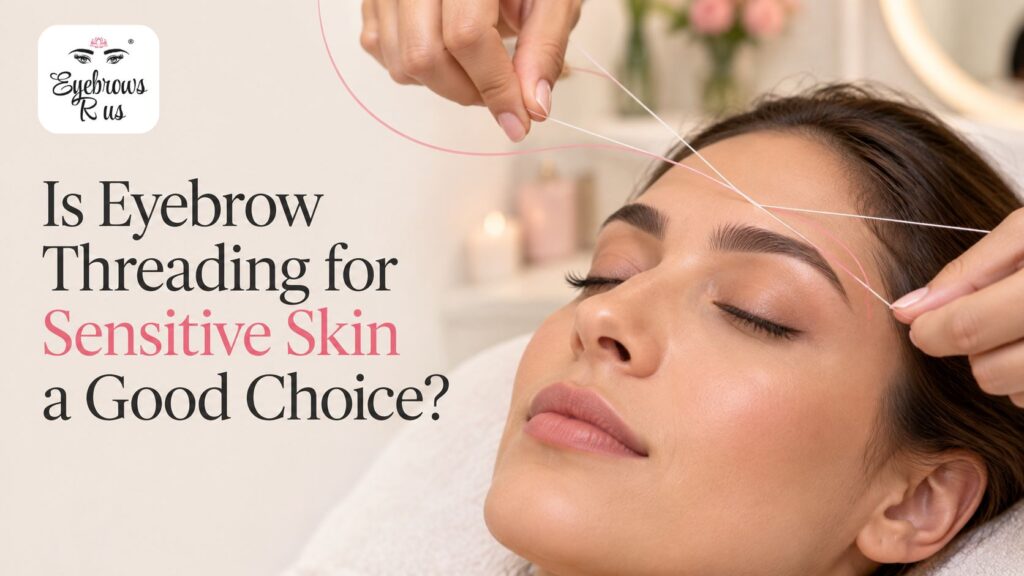
Yes, eyebrow threading for sensitive skin can be a good choice because it removes hair with thread instead of applying hot wax, adhesives, or depilatory chemicals. However, sensitive skin can still become red, tender, or bumpy after threading, so the technician’s technique, sanitation practices, your current skin condition, and proper aftercare all matter.
Threading is not automatically right for everyone. If the skin around your brows is sunburned, broken, actively inflamed, or recovering from a peel or another facial treatment, postponing the appointment is usually the safer decision.
What happens during eyebrow threading?
During brow threading, a technician twists a thin thread and rolls it across unwanted hair. The thread catches several hairs and removes them from the root without spreading wax or hair-removal cream across the skin.
This method gives the technician control over individual hairs and small rows of hair. That control can be useful when cleaning up a brow line without removing more hair than necessary.
Threading may feel like repeated pinching or tugging. The feeling can be more noticeable around the arch and lower brow, where the skin is thin.
In short: Threading removes hair from the root using thread, but it does not require wax, heat, or chemical hair removers.
Why can eyebrow threading for sensitive skin be a reasonable option?
Threading limits the number of products placed on the treatment area. For people who react to fragrances, wax ingredients, adhesives, or depilatory creams, that simpler process may be easier to tolerate.
It also allows for precise eyebrow shaping for sensitive skin. A trained technician can follow the natural brow line and remove only the hairs needed for cleanup and definition.
Dermatologist-reviewed guidance notes that threading can cause less surface irritation than waxing for many people because waxing involves both heated wax and contact with the skin. Still, reactions vary, and some clients tolerate waxing better than threading.
Potential advantages include:
- No hot wax applied to the brow area
- No depilatory chemicals
- Precise control around the brow shape
- Fast removal of several hairs at once
- Useful for regular brow cleanup
- Less product contact during natural eyebrow hair removal
In short: Threading may reduce certain triggers associated with wax and chemical products, but it cannot eliminate irritation caused by pulling hair from the root.
Can threading still irritate sensitive skin?
Yes. Eyebrow threading irritation can occur even when the service is performed correctly. Each removed hair temporarily affects the follicle, and the thread repeatedly passes across a small area of skin.
Common temporary reactions include:
- Mild eyebrow threading redness
- Tenderness or a warm sensation
- Small bumps around the follicles
- Minor swelling
- A tight or tingling feeling
Medical guidance indicates that redness, irritation, and moderate swelling can occur during the hours after threading. Breakouts and infections are also possible, although the infection risk is considered low when proper sanitation is followed.
These reactions do not automatically mean that you are allergic to threading. Thread itself is rarely the only factor. Friction, repeated passes, dirty hands, makeup, aftercare products, and touching the area can all affect how the skin responds.
Threading vs. waxing for sensitive skin
The right option depends on what triggers your skin and which method you have tolerated previously.
Factor | Threading | Waxing |
What touches the skin | Thread and any cleansing or soothing product | Wax, applicators and pre- or post-wax products |
Heat involved | No | Usually warm wax |
Hair removal | Pulled from the root | Pulled from the root |
Precision | Strong control around individual brow hairs | Removes larger sections quickly |
Possible reactions | Redness, tenderness, bumps or swelling | Redness, heat, irritation, product reaction or skin lifting |
Better fit | Precise facial hair removal with limited product contact | Clients whose skin already tolerates waxing |
When comparing threading vs waxing for sensitive skin, threading may be worth considering if wax heat or ingredients have caused previous reactions. Waxing may remain suitable for someone who consistently tolerates it and dislikes the repeated tugging sensation of threading.
People using retinoids need extra caution. Retinoids can make skin dry or irritated, while waxing can place additional stress on the skin’s surface. Threading avoids wax adhesion, but it can still irritate sensitized skin.
Do not stop a prescription medication solely for a beauty appointment. Ask the prescribing clinician how to handle it and tell the brow technician what you use.
In short: Threading avoids wax and heat, but the better method is the one your skin can tolerate safely.
When should you postpone eyebrow threading?
Delay the appointment if the treatment area has:
- A fresh sunburn
- Open cuts or broken skin
- Active eczema or dermatitis
- A spreading rash
- Painful or inflamed acne lesions
- A recent chemical peel, laser treatment, or aggressive facial
- Unexplained swelling or signs of infection
You should also tell your technician if you use retinol, prescription retinoids, exfoliating acids, acne medication, or products that have recently made your skin peel.
Dermatologist-reviewed guidance recommends avoiding retinol and retinoid products for several days before threading because sensitized skin may peel or bleed more easily. If the product is prescribed, confirm any pause with your clinician first.
How to prepare sensitive skin before threading
Good preparation cannot promise a reaction-free appointment, but it can remove avoidable sources of irritation.
One week to several days before
Review your skincare routine for retinoids, glycolic acid, salicylic acid, strong exfoliants, peels, or other products that cause sensitivity. Follow medical advice for prescription products and tell the technician about recent treatments.
Avoid scheduling threading immediately after a facial, peel, or laser service. Your provider can tell you when your skin has recovered enough for facial hair removal.
On the day of your appointment
Arrive with clean skin if possible. Avoid heavy brow makeup, fragranced products, and a harsh scrub immediately before the service.
Tell the technician:
- That your skin is sensitive
- Which products or medications you use
- Whether you have reacted to threading or waxing before
- If you want a light cleanup instead of major reshaping
- Whether any area feels sore or inflamed
For a first appointment, conservative shaping is sensible. Removing fewer hairs gives you a chance to see how your skin responds.
Eyebrow threading aftercare for easily irritated skin
Keep aftercare simple. Applying several new products immediately after threading can make it difficult to identify what caused a reaction.
After your appointment:
- Avoid rubbing or touching the brow area.
- Use a clean, cool compress if the skin feels warm.
- Skip scrubs, exfoliating acids, and fragranced products on the treated area.
- Avoid applying heavy makeup directly over freshly threaded skin.
- Stay away from pools and hot tubs while the area is irritated.
- Limit direct sun exposure and follow suitable sun-protection guidance.
- Avoid picking at small bumps.
Medical guidance recommends avoiding unnecessary touching, pools, hot tubs, sun exposure, and makeup after threading to reduce the chance of irritation, breakouts, and infection.
Las Vegas clients should think about heat and sun when scheduling. If your skin becomes reactive after threading, an appointment before several hours outdoors, a pool visit, or a hard workout may be poor timing.
In short: Clean hands, minimal products, and less heat, sun, and friction give irritated skin time to settle.
What is normal, and when should you get help?
Mild redness or tenderness that gradually settles is a common eyebrow threading side effect. Sensitive skin may take longer to calm than skin that rarely reacts.
Contact a medical professional if you develop:
- Worsening pain instead of gradual improvement
- Blisters or significant skin peeling
- Pus or spreading redness
- Severe swelling around the eyes
- A widespread rash
- Trouble breathing or another sign of a serious allergic reaction
A brow studio can discuss the service and general aftercare, but it cannot diagnose a skin condition. Persistent or severe reactions need medical assessment.
How to choose a threading studio when your skin is sensitive
Technique and hygiene matter as much as the hair-removal method. A qualified technician should be willing to explain the process and adjust the service based on your skin.
Before beginning, look for:
- Fresh thread for each client
- Clean hands and a sanitary work area
- A technician who asks about skin sensitivity
- No repeated passes over visibly irritated skin
- Clear aftercare guidance
- A conservative approach to brow shaping
You should be comfortable asking the technician to stop if the skin begins to feel unusually hot, painful, or raw. Discomfort should not be treated as something you simply have to tolerate.
Frequently asked questions
For many people, sensitive skin eyebrow threading is a reasonable option because it does not require hot wax or depilatory chemicals. It may still cause temporary redness, bumps, or tenderness, and it should not be performed over broken or actively inflamed skin.
Yes, it can. Eyebrow threading irritation usually comes from hair being removed at the root, friction from the thread, repeated passes, or products applied before or after the service.
Mild eyebrow threading redness may settle within a few hours, but reactions vary. Redness that worsens, spreads, becomes painful, or develops signs of infection should be assessed by a medical professional.
Threading may suit people who react to wax heat or ingredients because it limits product contact. Waxing may still work for clients who tolerate it well, so neither method is automatically better for every skin type.
Acne-prone skin eyebrow threading may be possible when the treatment area is calm. Threading directly over painful, broken, or inflamed acne can aggravate the area, so tell the technician and postpone the service when necessary.
Retinol and prescription retinoids can make skin more sensitive. Tell your technician and ask the prescribing clinician before stopping prescription treatment. You may need to delay threading until the skin is no longer peeling, sore, or inflamed.
Avoid touching the area, heavy makeup, strong exfoliants, fragranced products, pools, hot tubs, and unnecessary sun exposure while the skin is irritated. Follow any personalized instructions from your technician or dermatologist.
Decide based on your skin, not a blanket claim
Eyebrow threading for sensitive skin can offer precise brow shaping without wax, heat, or depilatory chemicals. It is still a hair-removal procedure, so mild redness and tenderness are possible, and treatment should wait when the skin is damaged or actively inflamed.
If you are looking for eyebrow threading in Las Vegas, Eyebrows R Us offers traditional threading and brow-shaping services at multiple Las Vegas Valley locations. Tell the brow specialist about your sensitivity before the service so they can take a conservative approach.
Walk in today or book an appointment with Eyebrows R Us for clean, carefully shaped brows in Las Vegas.
 ICONIER Digital Agency