

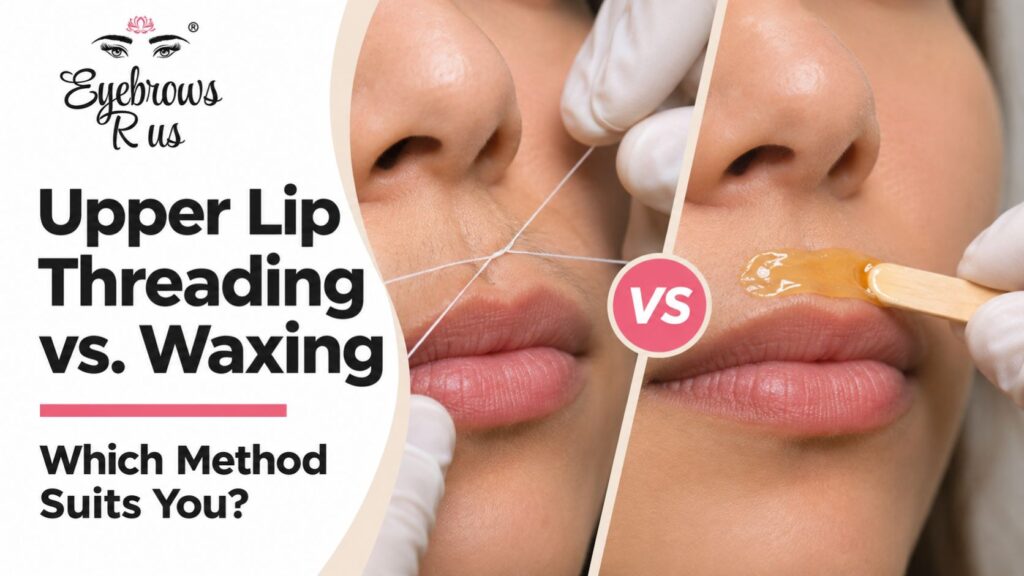
When comparing upper lip threading vs. waxing, threading is often the better option if you want precise hair removal without applying heated wax or adhesive products to your skin. Waxing can be convenient for removing hair across a defined area in one application. Both techniques remove hair from the root, so results generally last longer than shaving. The better choice depends on your skin’s sensitivity, the hair being removed, and your personal preferences.
Upper-lip hair is completely normal, but some people prefer removing it because it’s visible in certain lighting, noticeable under makeup, or simply something they don’t want to maintain.
If you’re deciding between threading and waxing, understanding how each method affects the skin will make that choice easier.
What Is Upper Lip Threading?
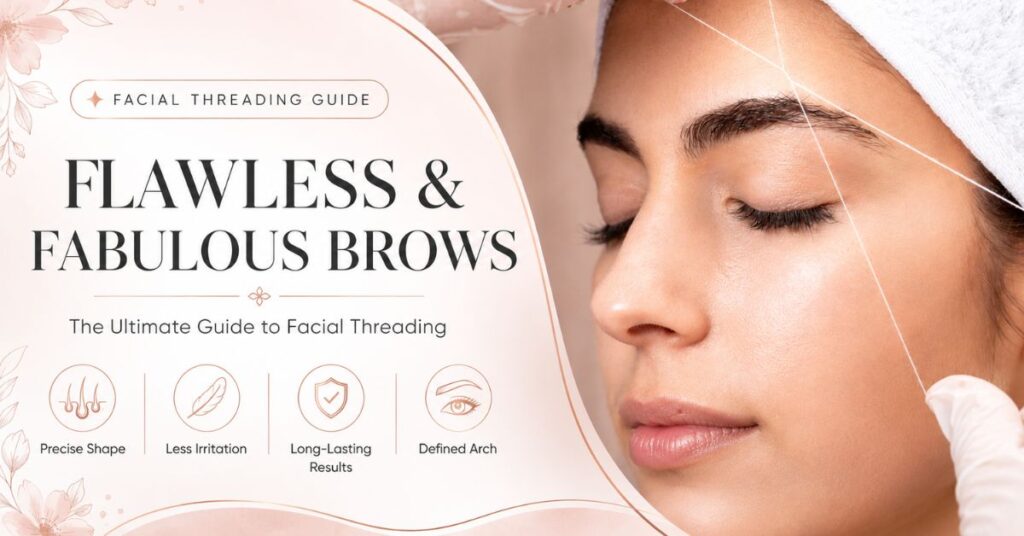
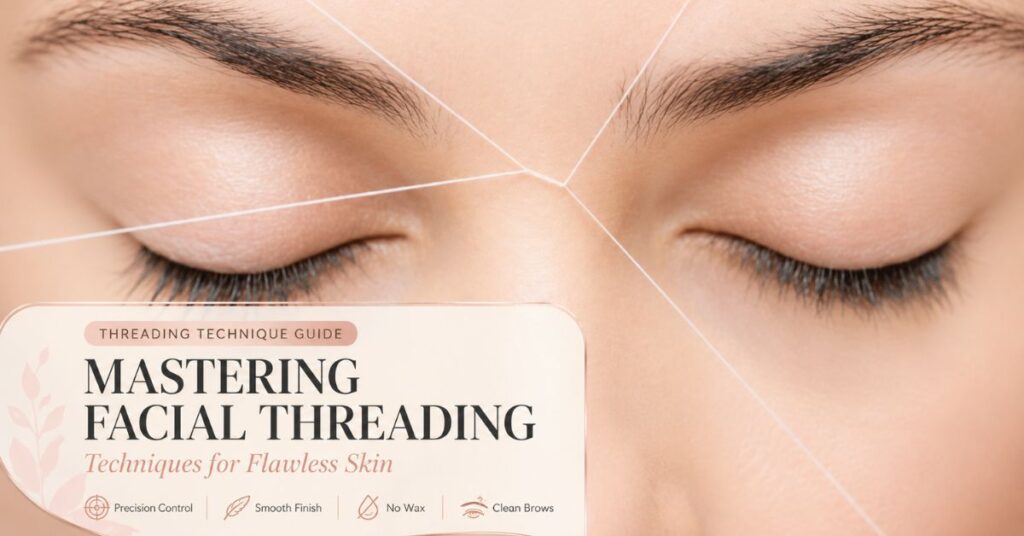
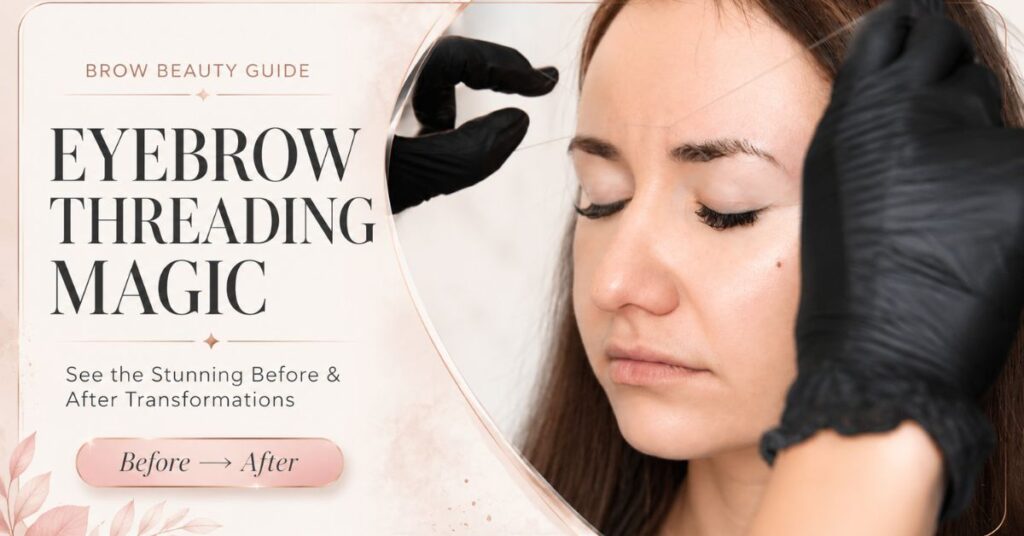
Upper lip threading is a facial hair removal technique that uses twisted cotton thread to catch and pull unwanted hairs from their roots.
A threading professional moves the thread across the selected area, removing small groups of hairs without applying wax, shaving cream, or chemical hair removers.
The technique is especially useful when you want to remove fine hairs around the upper lip or target a particular section.
Because threading can work in relatively small areas, it gives the professional control over where hair is removed.
However, threading still involves friction and pulling hairs from the follicles. Temporary redness, tenderness, or small bumps can occur.
What Is Upper Lip Waxing?
Upper lip waxing removes unwanted facial hair by applying wax to the skin and then removing it along with the attached hairs.
Depending on the technique, a technician may use warm wax, hard wax, or soft wax with a strip.
Waxing can remove multiple hairs in a single pull, making it a quick option for a small, clearly defined area like the upper lip.
The main difference is that wax adheres to the skin as well as the hair.
For some people, that isn’t a problem. For others, particularly those using certain acne treatments or experiencing skin sensitivity, waxing can increase the risk of irritation or skin injury.
Hot wax can also cause burns if it is overheated or applied incorrectly.
Upper Lip Threading vs. Waxing: Key Differences
Both techniques remove facial hair from the root, but they aren’t identical.
Factor | Upper Lip Threading | Upper Lip Waxing |
Technique | Twisted cotton thread removes hairs | Wax adheres to hairs and is removed |
Precision | Allows targeted removal in small areas | Removes hair from the waxed section |
Skin contact | Thread moves across the skin | Wax adheres directly to the skin |
Pain | Brief pulling or pinching sensations | A quick pulling sensation |
Sensitive skin | Often a useful option, but irritation is possible | May irritate sensitive or fragile skin |
Results | Commonly several weeks | Commonly several weeks |
Potential side effects | Redness, bumps, ingrown hairs | Redness, burns, skin lifting, ingrown hairs |
Best suited for | Targeted facial hair removal | Quick removal across a defined area |
Neither treatment is universally better.
If you already wax your upper lip comfortably and like the results, there’s no automatic reason to change. But if waxing repeatedly leaves your skin irritated, threading may be worth discussing with a professional.
Which Method Is Better for Sensitive Skin?
Threading often has an advantage for people who want to avoid the ingredients, heat, and adhesive action involved in waxing.
That doesn’t mean it’s completely irritation-free.
When Threading May Be the Better Choice
Threading may be appropriate if:
- Your skin reacts to certain waxing products.
- You prefer facial hair removal without heated wax.
- You want to remove small sections of unwanted hair.
- You have fine upper-lip hairs that need careful removal.
- You prefer a technique that doesn’t apply a product over the entire treated area.
The American Academy of Dermatology identifies threading as an option for people with sensitive or acne-prone skin, although the condition of the skin being treated still matters.
If your upper lip is sunburned, broken, inflamed, or affected by an active cold sore, postpone cosmetic hair removal until the area has healed.
When Waxing May Not Be Appropriate
Waxing requires particular caution if you use skincare or medications that make the skin more vulnerable to injury.
The American Academy of Dermatology advises against waxing while taking isotretinoin and for six months after stopping it. Facial waxing also requires precautions with products such as tretinoin and other retinoids.
If you use prescription acne treatments or other medications affecting your skin, discuss hair removal with your dermatologist rather than changing your treatment routine on your own.
Threading avoids wax-related skin lifting, but it is not automatically safe over irritated or medically compromised skin.
Does Upper Lip Threading Hurt More Than Waxing?
Neither treatment is completely painless, and there’s no single answer that applies to everyone.
Threading creates repeated, brief pulling sensations as the thread catches individual hairs or small groups of hairs.
Waxing removes a larger section of hair in a single motion, which some people find more uncomfortable.
Your experience may depend on:
- The thickness and density of your upper-lip hair
- Your personal pain tolerance
- Whether your skin is already irritated
- The technique used during treatment
- Your previous experience with facial hair removal
If you’re particularly nervous about discomfort, tell your threading professional before the appointment.
Don’t assume that a treatment advertised as gentle will feel painless. Mild discomfort is a normal possibility with either method.
How Long Do Upper Lip Threading and Waxing Last?
Both threading and waxing remove hair from the root, so smoother-looking skin may last for several weeks.
Some people begin noticing regrowth within two or three weeks, while others remain satisfied for longer.
The results depend on individual hair growth, the amount of hair removed, and how visible the returning hairs are.
Neither method permanently stops facial hair growth.
If your upper-lip hair grows quickly, you may want more frequent maintenance. If your hair is fine and difficult to notice, you might prefer longer intervals.
There is no need to schedule another appointment simply because a certain number of days has passed.
Does Upper Lip Hair Grow Back Thicker After Threading or Waxing?
No. Threading and waxing do not make the hair follicle produce thicker or darker hair.
Both techniques remove existing hair. They don’t increase the number of follicles or change your underlying hair-growth pattern.
Regrowth may appear more noticeable under certain lighting or as several hairs become visible around the same time, but that isn’t proof that the treatment caused thicker hair.
If you experience a sudden increase in coarse facial hair, especially alongside other unexpected changes, a healthcare professional can help determine whether an underlying condition needs attention.
What Should You Do Before Upper Lip Threading?
You don’t need an elaborate preparation routine, but a few steps can help you have a more comfortable appointment.
Arrive with the upper-lip area reasonably clean and avoid applying heavy makeup immediately beforehand.
Let the hair grow enough for the thread to catch it. Very short hairs may be difficult to remove effectively, so avoid shaving immediately before your visit.
Tell the professional if you use retinoids, have sensitive skin, have recently undergone a cosmetic procedure, or are experiencing irritation.
If you are preparing for a wedding, professional photos, or another important event, consider scheduling your hair removal a few days in advance rather than immediately before your makeup appointment.
This gives you some time in case temporary redness develops.
How to Care for Your Upper Lip After Threading
After threading, the skin above your lip may look slightly pink or feel sensitive.
For the first several hours, keep your routine simple.
Avoid touching the area repeatedly, applying irritating products, or using harsh exfoliating scrubs.
A cool, clean compress can help with mild temporary discomfort. If your skin feels dry, use a gentle moisturizer you already tolerate.
Avoid covering noticeably irritated skin with heavy makeup. Once the skin has settled, return to your usual products gradually.
If you live in Las Vegas, consider your outdoor plans as well. Heat, sweat, and prolonged sun exposure can be uncomfortable when the skin has just been treated.
Use appropriate sun protection as tolerated, and avoid exposing irritated skin to unnecessary heat.
For more practical guidance, see our article on wearing makeup after facial threading.
When Should You Choose Professional Upper Lip Threading?
Threading is worth considering when you want controlled facial hair removal without wax.
It may be particularly appealing if you are already having your eyebrows threaded and want to discuss removing unwanted hair from another small facial area.
A professional can assess the visible hair and skin condition before proceeding.
Remember that not every upper-lip hair needs to be removed. Some people prefer clearing the entire area, while others only want to address a small patch of darker or more noticeable hairs.
Your preferred result should guide the treatment.
Frequently asked questions
Threading can be effective for fine, visible upper-lip hairs because the thread can catch and remove small groups of hairs. Waxing can also remove fine hair. The better choice depends on your skin and preferences.
Retinol and prescription retinoids can affect skin sensitivity. Threading may avoid some wax-related risks, but you should tell the professional what you use and follow your dermatologist's advice, especially if your skin is irritated.
Yes. Temporary bumps, ingrown hairs, or irritation are possible after threading. Avoid picking the area and seek medical advice if symptoms become painful, persistent, or progressively worse.
No. Threading removes existing hairs from their roots but doesn't permanently disable the follicles. Hair generally grows back over time.
It's better to let the skin settle before applying makeup directly over the treated area. If you still have redness or tenderness, waiting until the next day may be more comfortable.
Try Professional Upper Lip Threading in Las Vegas
The best hair removal method is the one that suits your skin, gives you the appearance you want, and fits comfortably into your routine.
If you’d rather avoid wax or want precise removal of unwanted upper-lip hair, threading may be a practical choice.
Eyebrows R Us offers traditional facial threading services in the Las Vegas Valley, including hair removal for facial areas such as the upper lip.
Want to discuss upper lip threading? Find an Eyebrows R Us location, walk in today, or call 702-606-2769 for service information.
 ICONIER Digital Agency