

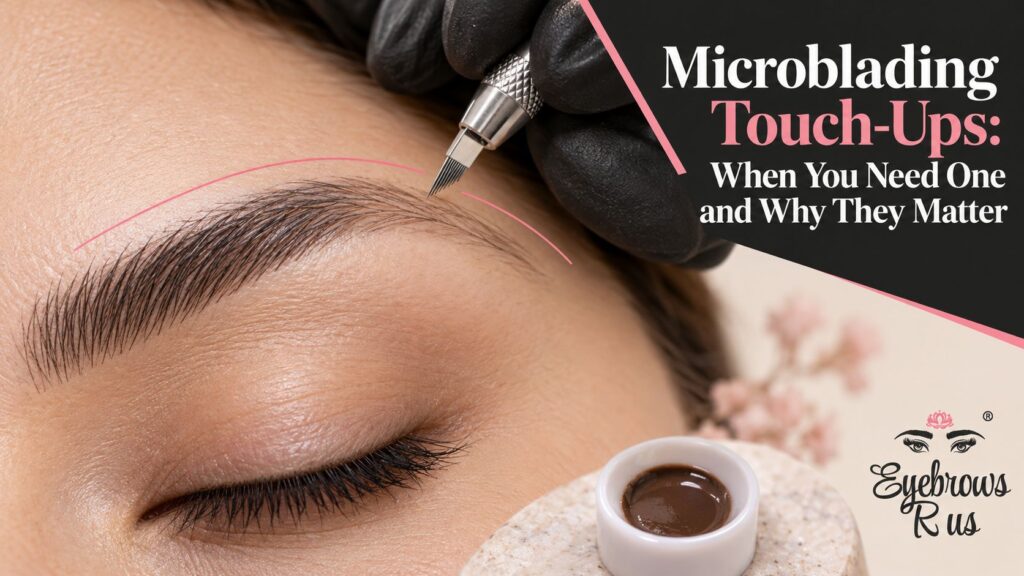
Microblading touch-ups are follow-up appointments used to assess healed pigment, reinforce light or patchy areas, and maintain the appearance of microbladed brows. The first appointment is commonly scheduled after the initial healing period, often around six to eight weeks, while later refreshes are based on visible fading rather than one rigid schedule.
A touch-up does not necessarily mean the original procedure failed. Skin retains pigment differently across the brow, and the final healed color cannot be judged accurately while the skin is still flaking, darkening, or settling.
What is a microblading touch-up?
A microblading touch-up appointment is a targeted permanent makeup session performed after the artist evaluates how the brows have healed. Instead of repeating the entire first procedure, the artist normally focuses on areas where strokes have faded, healed unevenly, or need minor refinement.
During the appointment, the artist may:
- Examine the healed color and pigment distribution
- Reinforce strokes that healed too lightly
- Fill small gaps or patchy sections
- Make limited adjustments to symmetry
- Refine the tail, arch, or front of the brow
- Adjust the pigment tone when appropriate
- Review the client’s healing and aftercare experience
Microblading places pigment into the skin, so every additional session should have a clear purpose. More frequent treatment does not automatically produce better brows.
In short: A touch-up is an assessment and refinement appointment, not necessarily a complete redo of the brows.
The two types of microblading touch-ups
The term “touch-up” is used for two different appointments. Understanding the difference prevents confusion about timing, pricing, and what the artist can accomplish.
Detail | Initial perfecting appointment | Later maintenance refresh |
Main purpose | Complete and refine the original service | Refresh brows that have faded over time |
Common timing | After initial healing, often around 6–8 weeks | Frequently around 12–18 months, but individual timing varies |
What is assessed | Early pigment retention, gaps, symmetry and healed color | Overall fading, softened strokes, color changes and remaining pigment |
Amount of work | Usually targeted corrections | May range from a light refresh to more extensive reworking |
Timing decision | Based on sufficient healing | Based on visible fading and the artist’s assessment |
Possible limitation | Skin may not be ready if booked too early | Dense or discolored pigment may require waiting or another approach |
The initial perfecting appointment
The initial microblading touch-up follows the first procedure after the skin has had time to heal. Some pigment may appear lighter or less even once flaking and surface healing have finished.
At this appointment, the artist can see which strokes remained clear and which areas need another pass. It is often treated as the second stage of the original microblading process, although studio policies and recommended timing differ.
A later color refresh
A microblading color refresh is a maintenance appointment for brows that were previously completed and have faded over time. This appointment may take place a year or longer after the original procedure, depending on the skin, pigment, lifestyle, skincare habits, and desired appearance.
The calendar should not be the only deciding factor. If the pigment remains dense and the strokes are still visible, adding more pigment may be unnecessary.
In short: The first touch-up completes the initial process. A later refresh maintains healed work after noticeable fading.
Why does the first touch-up matter?
The microblading healing process can change how fresh brow strokes appear. Immediately after treatment, brows may look darker and sharper than expected. They may then flake, appear temporarily lighter, and gradually settle into their healed color.
Not every area retains pigment in the same way. Differences can be influenced by:
- Skin characteristics
- Oil production
- Natural brow hair
- Aftercare
- Sun exposure
- Skincare products used around the brows
- How the individual’s skin heals
Waiting until the brows have healed lets the artist work from the actual result instead of reacting to temporary changes. Performing additional work before healing is complete makes it harder to judge pigment retention accurately.
A permanent makeup appointment also involves breaking the skin and depositing pigment. The FDA warns that permanent makeup can carry risks including infection and allergic reactions, particularly when equipment, practices, or pigments are contaminated.
When do you need a maintenance refresh?
You may be ready for microblading maintenance when the brows have clearly faded, but enough of the original shape remains for the artist to evaluate.
Common signs include:
- Hair-like strokes no longer look distinct
- The tails appear faint or uneven
- Small gaps have become noticeable
- The color looks washed out
- One brow has faded faster than the other
- You rely more heavily on brow makeup again
- The original shape is still visible but lacks definition
Check your brows in natural daylight without makeup. Bathroom lighting, tinted moisturizer, brow gel, and pencils can hide how much pigment remains.
Do not book solely because a certain number of months have passed. Some people may need attention sooner, while others can wait longer.
In short: Refresh the brows when fading is visible and an artist confirms that the skin and remaining pigment are suitable for another session.
What affects microblading pigment retention?
There is no universal maintenance schedule because pigment does not fade at the same rate for every client.
Skin characteristics
Oilier skin may soften the appearance of fine strokes sooner. Drier skin may retain strokes differently, but dryness and flaking can also affect the healing period.
Skin type alone does not determine the result. Technique, pigment choice, aftercare, sun exposure, and the starting condition of the skin also matter.
Sun exposure
Frequent sun exposure can contribute to fading and color changes. This is particularly relevant for clients receiving microblading in Las Vegas, where strong sun exposure can be part of daily life.
Follow the artist’s instructions about protecting healed brows. Sunscreen should not be applied over newly treated or unhealed skin unless the artist or a healthcare professional has specifically advised it.
Skincare products
Retinoids, exfoliating acids, peels, and resurfacing treatments used close to the brows may affect the skin or contribute to faster fading. Tell the artist which products and treatments you use before scheduling an appointment.
Do not discontinue prescribed skincare without asking the prescribing clinician.
Aftercare
Proper microblading aftercare supports normal healing and gives the pigment a better chance to settle. Picking flakes, rubbing the brows, using unapproved products, or ignoring the artist’s instructions may affect the healed appearance.
The original technique
Fine, lightly placed strokes may fade sooner than a denser brow style. A natural-looking result and a long-lasting result are not always the same objective, so discuss your priorities before treatment.
Can you get a touch-up too soon?
Yes. A touch-up should not be performed while the skin is still healing, peeling, tender, swollen, or irritated.
The brows may look uneven during healing, but that does not mean they need immediate correction. Temporary light patches can appear before the final color becomes visible.
An artist may recommend waiting if:
- The skin has not completely healed
- The brows remain dark or heavily saturated
- Irritation or scabbing is still present
- The final pigment color has not settled
- The requested change cannot be safely added over existing work
Touching up too frequently can also build more pigment into the same area. Over time, fine strokes may become less distinct, and making the brows lighter or smaller can become difficult.
In short: Let the skin heal, and the pigment settle before deciding what needs correction.
What happens during a microblading touch-up appointment?
The appointment should begin with an assessment and conversation rather than immediately adding pigment.
A typical visit may include:
- Reviewing the healed result
The artist checks pigment retention, stroke definition, symmetry, color, and areas that faded unevenly. - Discussing your concerns
Explain what you like, what looks different from the initial design, and whether your preferences have changed. - Confirming the plan
The artist identifies which areas need work and whether the existing pigment can support the requested adjustment. - Preparing the treatment area
The brow area is cleaned and prepared according to the artist’s procedure. - Adding targeted pigment
Light or missing areas may receive new strokes. Existing areas that have healed well may not need additional work. - Reviewing aftercare
You should receive instructions for cleaning, moisture, makeup, exercise, sun exposure, and other activities during healing.
The FDA notes that poor hygiene and contaminated equipment or ink can increase infection risks with tattoos and permanent makeup. Clients should choose a professional who follows sanitary procedures and uses appropriate single-use supplies.
What can and cannot be changed at a touch-up?
A touch-up may allow small adjustments, but it cannot reverse every decision made during the original procedure.
An artist may be able to:
- Add definition to faded strokes
- Fill minor gaps
- Extend a tail slightly
- Adjust small symmetry differences
- Modify the tone within reasonable limits
- Make the brows somewhat fuller or darker
A standard touch-up usually cannot:
- Make dark brows instantly lighter
- Remove unwanted pigment
- Significantly reduce the brow width
- Completely relocate the existing shape
- Cover every type of discolored or saturated pigment
- Correct active scarring or a skin condition
If the original pigment is too dark, too dense, significantly discolored, or placed outside the desired shape, removal, correction, waiting, or a different brow technique may be required. Adding another layer of pigment is not always the right answer.
How to prepare for your appointment
Before an eyebrow microblading touch-up, follow the instructions provided by your artist. General preparation may include avoiding irritation around the brows and disclosing relevant skincare products, medications, allergies, and recent cosmetic treatments.
Bring:
- Photos of the brows immediately after the first appointment
- Photos from different stages of healing
- A list of skincare products used around the brows
- Details about recent facials, peels, injectables, or laser treatments
- Examples showing any minor shape or color preference
If another artist performed the original service, arrange an assessment before assuming the brows can receive a standard touch-up. The new artist needs to examine the existing pigment, depth, color, shape, and skin condition.
When should you postpone the appointment?
Contact the artist before attending if you have:
- Broken or irritated skin around the brows
- A rash, infection, or unexplained swelling
- Significant scabbing from the previous session
- A recent sunburn
- An upcoming medical or cosmetic procedure near the treatment area
- A health or medication change that may affect healing
Permanent makeup can cause complications including infections, allergic reactions, pigment movement, color changes, and dissatisfaction with the final result. The American Academy of Dermatology advises people considering permanent makeup to understand these risks and discuss relevant concerns with a dermatologist.
Frequently asked questions
The first perfecting appointment is commonly scheduled after the brows have healed, often around six to eight weeks. Later microblading touch-ups should be based on fading, skin condition, and the artist’s assessment rather than the calendar alone.
A first follow-up is commonly part of the full microblading process because it lets the artist evaluate the healed pigment and refine light areas. Later maintenance is optional and depends on whether you want to preserve the brow’s definition.
Many clients consider a refresh around 12 to 18 months, but this is not a rule. Some brows fade sooner, while others remain defined longer.
The artist assesses healed pigment, discusses your concerns, and adds pigment only where needed. Minor color or shape refinements may be possible.
Yes. Treating skin that has not finished healing can make it difficult to judge the final result and may expose the area to unnecessary additional trauma.
Discomfort varies by person and by how much of the brow needs work. A targeted session may involve less work than the original appointment, but it still breaks the skin and should not be described as painless.
Possibly, but the new artist should inspect the existing pigment first. Some brows can be refreshed, while others may require more fading, correction, removal, or a different permanent brow technique.
Maintain your brows without rushing the next appointment
Microblading touch-ups help refine uneven healing and restore brows that have genuinely faded. The first perfecting visit and a later maintenance refresh serve different purposes, so they should not follow the same decision process.
Wait until the skin has healed, assess your brows without makeup, and let a trained artist examine the remaining pigment before adding more. If the shape still looks clear and the color remains dense, waiting may be better than treating the brows again.
For a microblading touch-up in Las Vegas, contact Eyebrows R Us to discuss your existing brows, healing progress, and maintenance options before scheduling treatment.
Call Eyebrows R Us or book a consultation to find out whether your brows need a targeted touch-up, a later refresh, or more time to fade.

 ICONIER Digital Agency